Our Research
Pioneering New Approaches in Flow Virometry and Virus Sorting
Our lab is actively pioneering new experimental approaches in flow virometry and viral sorting to study virus particles. We use nanoscale flow cytometry and targeted labeling strategies to detect and characterize viruses with a diameter of ~100-120nm, with an emphasis on HIV and influenza virions. A key focus for ongoing development is improving sensitivity and breadth of detection for viral surface proteins, with long-term goals to better resolve viral heterogeneity and characterize virus subsets. We are also applying flow virometry approaches to enable high-yield sorting of intact virions, while preserving virus integrity for downstream analyses of purified virions. Our novel experimental tools have enabled deeper understandings of viral diversity, and we are actively pushing the boundaries of multiparametric virus analyses to broaden the virologist’s toolkit in support of new knowledge and discovery. This research is supported by an NSERC Tier II Canada Research Chair in ‘Single Virus Particle Analyses’ awarded to Dr. Guzzo.


Generating New Knowledge of Virus Infection

Textbook virus

Real-world HIV virus
Our lab is actively pioneering new experimental approaches in flow virometry and viral sorting to study virus particles. We use nanoscale flow cytometry and targeted labeling strategies to detect and characterize viruses with a diameter of ~100-120nm, with an emphasis on HIV and influenza virions. A key focus for ongoing development is improving sensitivity and breadth of detection for viral surface proteins, with long-term goals to better resolve viral heterogeneity and characterize virus subsets. We are also applying flow virometry approaches to enable high-yield sorting of intact virions, while preserving virus integrity for downstream analyses of purified virions. Our novel experimental tools have enabled deeper understandings of viral diversity, and we are actively pushing the boundaries of multiparametric virus analyses to broaden the virologist’s toolkit in support of new knowledge and discovery. This research is supported by an NSERC Tier II Canada Research Chair in ‘Single Virus Particle Analyses’ awarded to Dr. Guzzo.
HIV Cure Research
We leverage our unique experimental approaches to characterize the protein fingerprint present on the surface of virus particles, and how these unique fingerprints may provide new information on viral reservoirs. We are also investigating how HIV particle heterogeneity influences HIV infection and reservoir establishment. Our research shows that cellular environments can shape virion composition and function, and our experimental approaches could be applied for real-time disease monitoring and more targeted cure strategies. Taken together, our research aims to improve our ability to interrogate viral reservoirs and uncover mechanisms of HIV persistence that could translate to novel cure strategies. These studies are funded in part by a CIHR Team grant, as part of the Canadian Consortium for HIV Cure Research (CanCURE; cancurehiv.org), and CIHR operating grants to the Guzzo Lab.

Influenza Research
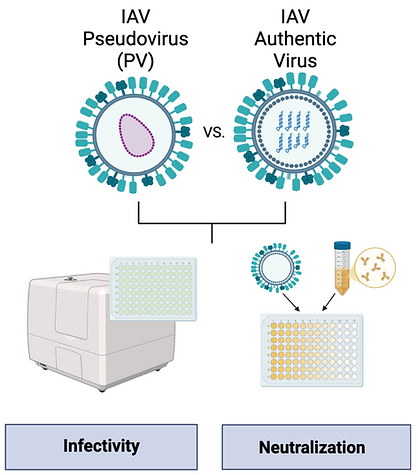
The Guzzo lab is working within a large team of researchers to generate a pan-Canadian infectious disease preparedness platform (PRECISE). In this work we are applying our novel experimental approaches with flow virometry-based studies on influenza viruses. We are characterizing surface proteins on influenza virions, and investigating neutralization sensitivity of different influenza particles. We are also generating standardized, high-throughput approaches for viral characterization in emerging and re-emerging infectious diseases. This work extends our flow virometry platforms beyond HIV to broader pandemic preparedness applications. PRECISE is funded by the Government of Canada’s ‘Canadian Biomedical Research Fund’ (CBRF) which is coordinated through the Canadian Hub for Health Intelligence and Innovation in Infectious Diseases (HI3), centered at the University of Toronto. More information about this collaborative work can be found at precisenet.ca.
Funding
We wish to acknowledge the generous support from the following sources


